



You’ve terminated an employee at your law firm, delivered the letter, and moved on.
Months later, the former employee files a wrongful termination lawsuit against your firm.
What seemed like routine paperwork is now part of a legal dispute. The termination letter will be reviewed by attorneys, insurers, and potentially a court. Every word will be compared with the firm’s records, policies, and prior communications as the former employee looks for evidence to support their case.
Your firm ultimately proved that the termination was justified. But it still spent considerable time and money defending a lawsuit that a stronger termination letter might have made easier to resolve.
A termination letter can’t eliminate the possibility of a lawsuit. But a clear, accurate, and consistent letter can help reduce unnecessary exposure, support the firm’s position, and make a future claim easier to defend.
Before you send one, it’s important to understand what commonly goes wrong and how to write a letter that doesn’t create unnecessary risk for your firm.
How a Termination Letter Can Become a Legal Liability
Even if your firm successfully defends itself, winning doesn’t make an employment claim inexpensive or harmless.
Defending a lawsuit may require the firm to produce personnel records, internal emails, performance reviews, policies, and communications between decision-makers. Partners, administrators, and employees may need to participate in interviews, discovery, or depositions. Time that would otherwise be spent serving clients is redirected toward defending the firm itself.
The dispute can also create legal expenses, insurance costs, settlement pressure, workplace disruption, and reputational concerns. Even when the allegations lack merit, the process can drag on and require the firm to spend considerable time and money proving that the termination was justified.
That’s why the termination letter matters.
A carefully written letter can’t correct a poorly documented or illegal termination. It can, however, accurately reflect the firm’s decision, support the existing record, and avoid giving a former employee additional grounds to challenge the firm’s explanation.
The following mistakes are where law firms most often create avoidable problems in that written record.
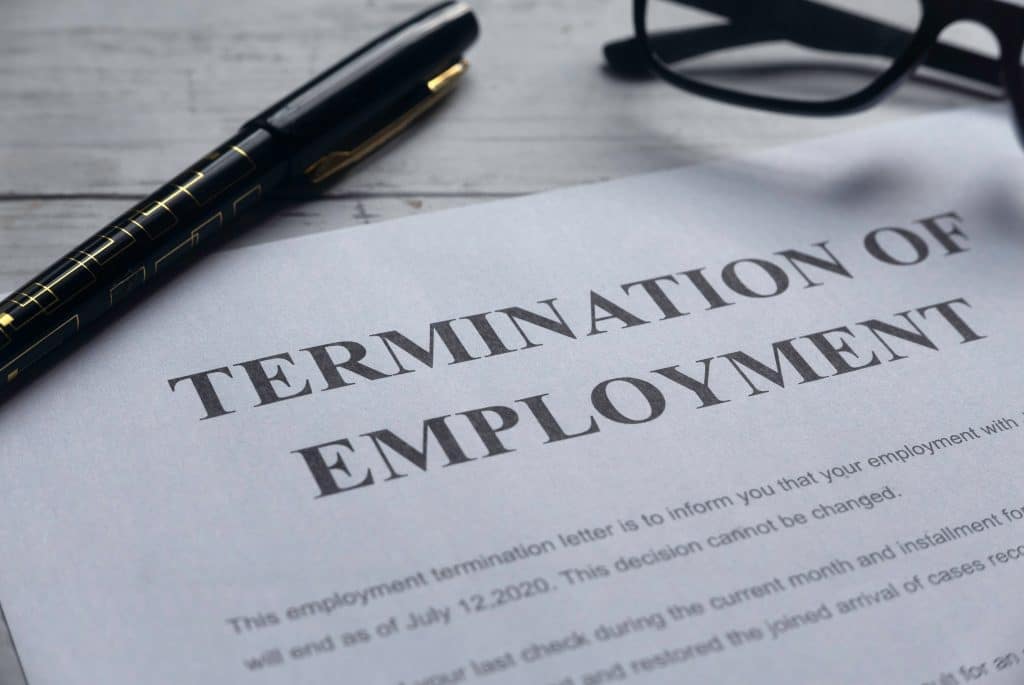
Common Termination Letter Mistakes
Most termination letter problems don’t begin with an obviously reckless statement. They often come from small drafting choices that seem reasonable in the moment, such as adding an extra explanation, relying on an old template, or using language that hasn’t been checked against the employee’s record.
Before sending the letter, watch for these five common mistakes.
1. Giving a Reason That Doesn’t Match the Record
One of the most damaging mistakes is stating a reason for termination that doesn’t align with previous communication.
For example, the letter may cite ongoing performance problems even though the employee’s recent evaluations were positive and no concerns were formally documented. The firm may describe the decision as a restructuring, while internal emails suggest that it was based on misconduct. Or different decision-makers may give different explanations for why the employee was let go.
Before stating a reason in the letter, make sure it accurately reflects the decision the firm made, the documentation that supports it, and what the employee has been told.
2. Using Accusatory or Legally Loaded Language
A termination letter should document the decision, not argue the firm’s case.
Words such as “dishonest,” “insubordinate,” “negligent,” or “unethical” can create problems when they’re broader or more conclusive than the underlying record supports. They may also invite a dispute over the label itself, rather than keeping the focus on the conduct or performance issue that led to the termination.
The risk increases when the language sounds emotional, punitive, or designed to shame the employee. A letter written in that tone can be harder to defend later and may make the former employee more likely to challenge the firm’s account.
Stick to clear, factual language that the firm can support.
3. Including Too Many Details
It’s natural to think that a more detailed letter will make the firm’s decision easier to defend. In practice, every additional explanation creates another statement that can be questioned, compared with the record, or taken out of context.
Problems often arise when the letter tries to recount every performance issue, disagreement, or incident that contributed to the decision. That doesn’t mean every termination letter should be vague or extremely brief.
“Firms get into serious trouble when they provide too many details but have poor documentation. […] If the firm cannot support each stated reason with consistent documentation, those details can create additional problems rather than resolve them.”
– Brian Kouwenhoven
A termination letter should include only the information needed to communicate the decision and explain the employee’s next steps. Before adding another detail, ask whether it’s accurate, supported, consistent, and necessary. If it doesn’t serve a clear purpose, it may be safer to leave it out.
4. Using a Generic Template Without Checking the Facts
A termination letter template can be a useful starting point, but it shouldn’t be treated as a finished document.
Even using an old termination letter can create risk. Old language may not match the employee’s circumstances or the firm’s current policies. Those errors can create confusion, unintended promises, or inconsistencies that become more significant if the termination is later challenged.
Review every sentence and placeholder before sending the letter. The final version should reflect the facts of this termination, not simply the structure of the last one.
5. Omitting or Misstating Important Next Steps
A termination letter should leave the employee with a clear understanding of what happens next. When key details are missing or incorrect, confusion can quickly turn into a dispute.
Make sure that the letter includes the correct effective termination date, final pay, benefits, severance, return of firm property, access to systems, or the appropriate contact for follow-up questions.
Before sending the letter, verify every administrative detail with the appropriate person. Don’t rely on memory or assume that language used in a previous termination applies to this one.

How To Write a Termination Letter That Reduces Risk
A strong termination letter doesn’t need to anticipate every argument a former employee might make or even prove that the firm made the right decision.
Its job is narrower: create a clear, reliable record of the termination without introducing confusion, contradictions, or promises the firm didn’t intend to make.
Use the following five steps to keep the letter focused on that purpose.
1. Confirm That the Decision Is Ready to Be Put in Writing
A termination letter should document a decision that’s already been made, not become the place where the firm tries to work out its reasoning.
Before drafting, confirm that the appropriate decision-makers agree on why the employee is being terminated and when the termination will take effect. Any approved severance, benefits information, or other arrangements should also be settled in advance.
If different people are still describing the decision differently, the letter isn’t ready to be written. Putting an unsettled explanation in writing can lock the firm into language that later conflicts with its records or with what the employee is told.
The letter should reflect a clear, supportable decision. It shouldn’t be used to create one after the fact.
2. Review the Employment Record Before Drafting
Before you write the letter, review the records connected to the termination decision:
- Performance evaluations,
- Disciplinary notices,
- Attendance records,
- Relevant emails,
- Employment agreements,
- The firm’s policies
The goal isn’t to repeat all of that information in the letter. It’s to make sure the letter doesn’t contradict the record.
Pay particular attention to recent positive reviews, inconsistent discipline, undocumented concerns, or communications that describe the situation differently. Those gaps don’t necessarily mean the termination can’t move forward, but they may affect how the letter should be written and whether additional review is needed.
A termination letter is strongest when it reflects a record the firm can already support.
3. Identify and Verify What the Letter Needs to Include
Before drafting, decide what information the employee needs to receive in writing and confirm that each detail is accurate.
Depending on the circumstances, that may include the effective termination date, final pay, benefits information, severance terms, return of firm property, access to systems, confidentiality obligations, and the appropriate contact for follow-up questions.
The goal is to give the employee clear, accurate information without including promises, deadlines, or terms the firm hasn’t approved.
4. Use Clear, Neutral, and Deliberate Language
A termination letter should read like a professional business record, not an argument against the employee.
State the decision directly, use factual language, and avoid emotional commentary, accusations, or legal conclusions the firm may later have to defend. The letter should also use the same core explanation that will be communicated during the termination meeting.
Before keeping a sentence, ask whether it’s accurate, necessary, supported by the record, and consistent with the firm’s decision. If it doesn’t help the employee understand the termination or what happens next, it may not belong in the letter.
Clear language doesn’t mean vague language. It means saying what needs to be said without creating new disputes or adding details that don’t serve a clear purpose.
5. Have the Letter Reviewed Before Delivery
Before the letter is delivered, have a third party review it with fresh eyes.
That reviewer might be an HR professional, a managing partner, a firm administrator, another attorney, or employment counsel. Their role is to look for inconsistencies, unsupported statements, missing information, or language that could be misunderstood.
“A firm should consider stopping the drafting process and consulting employment counsel as soon as there is reason to believe the employee may dispute the termination, allege discrimination, or otherwise challenge the firm’s stated reasons.”
– Brian Kouwenhoven
In higher-risk situations, employment counsel may be the appropriate reviewer, especially when the termination follows a complaint, leave request, accommodation issue, wage dispute, workplace injury, investigation, or departure from the firm’s normal process.
A second review won’t eliminate every risk, but it can catch problems that are much easier to fix before the letter is delivered than after a claim is filed.

A Strong Termination Letter Is Only Half the Protection
A well-written termination letter can do a lot toward reducing unnecessary risk. What it can’t do is stop a former employee from filing a lawsuit or pay the costs of responding to one.
That’s where employment practices liability insurance (EPLI) comes in.
EPLI is designed to reimburse law firms for the costs of defending against covered employment-related allegations, which may include wrongful termination, discrimination, harassment, retaliation, and other workplace claims. Depending on the policy and the allegations involved, coverage may help with legal defense costs, settlements, or judgments.
Not all EPLI policies are the same. Coverage can vary based on the policy language, exclusions, endorsements, limits, retention, reporting requirements, and the facts of the claim. Law firms should understand how their coverage is structured before an employment dispute occurs, not after the firm receives a demand letter or lawsuit.
Protect Your Firm Before an Employment Claim Begins
A careful termination letter is an important risk-management tool, but it should be supported by an EPLI policy that reflects your firm’s actual employment exposure.
Kouwenhoven & Associates Inc. helps law firms review their EPLI options, understand how policies differ, and identify potential gaps before a claim occurs. As an independent broker, we work with multiple carriers and help firms evaluate coverage based on their size, staffing, risk profile, and existing insurance program.
Before your next termination puts your procedures or coverage to the test, make sure your firm understands what protection it has in place. Contact Kouwenhoven & Associates to discuss your EPLI coverage and determine whether it still fits the needs of your practice.

